

Field Notes: February
Reading and listening recommendations; and a playlist for you to explore. Plus, a Bodyscapes book update and a note of the theme and date for the next Body Lab.

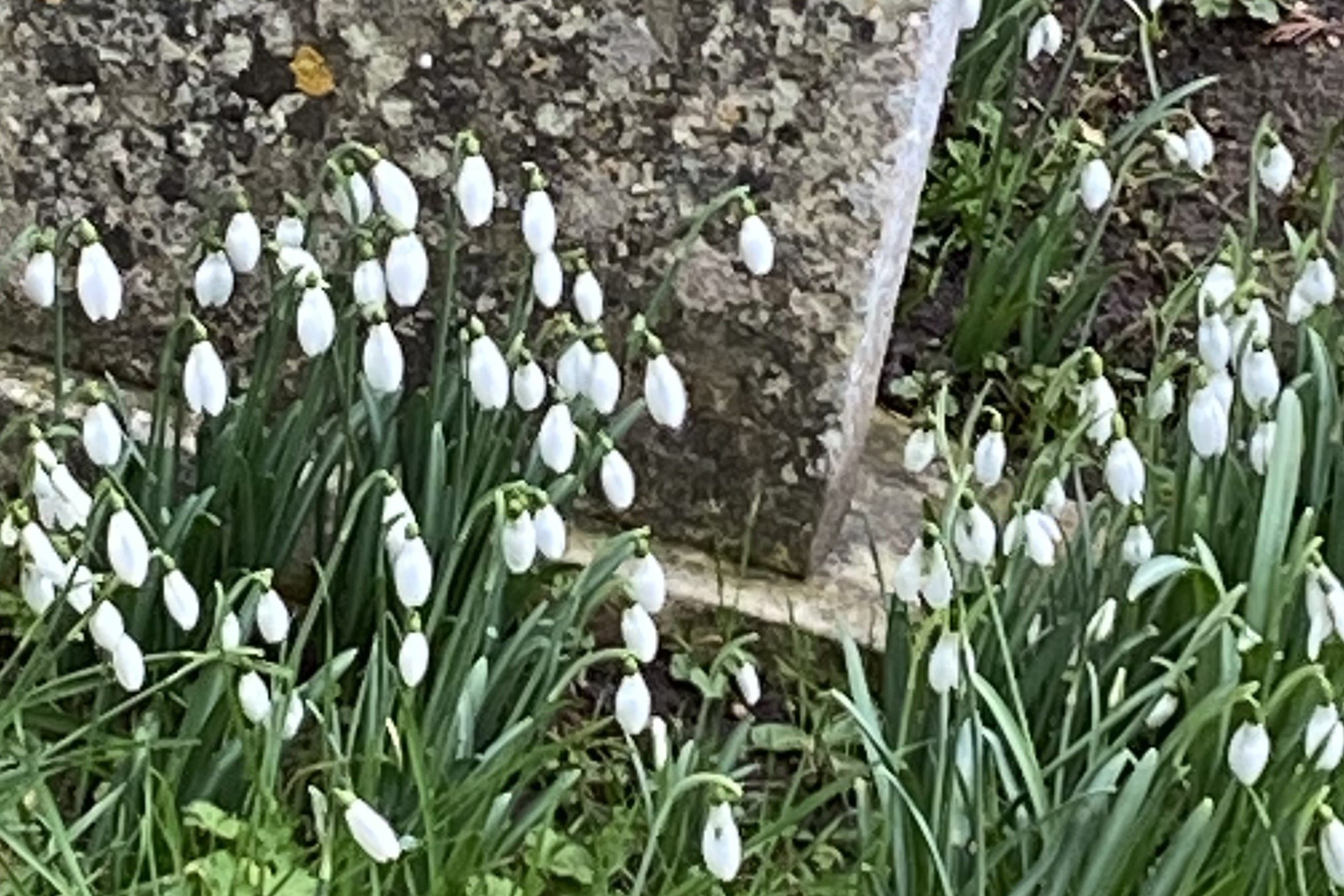
Sad to say, rather like last month, February has been wet, cold and grey. There were, according to my journal two sunny-ish days. These were notable because of the way everyone I met noted how their mood lifted, they felt brighter and it brought home how our bodymind needs sunlight and clear skies. When the weight of meteorological gloom lifts, it reminds us that, it is not going to be grey forever. The appearance of spring bulbs confirms this too: snowdrops, daffodils, narcissi, and the first grape hyacinths.
READING
I am transfixed by something called Object Oriented Ontology (which also goes by the cute name of Triple O) and I am slowly making my way through Waves and Stones by Graham Harman. I have the audio version on a slightly slower playback so I can listen closely, and the hardback with my post-it notes and pencil. I also have on hand the Pelican Book: Object Oriented Ontology, A New Theory of Everything.
I fell over this philosophy while listening to a podcast and by no means have a full grasp on it but one idea rang out clearly and has illuminated something about the way we experience embodied anatomy. Loosely put, the proposition is that objects exist independently of our awareness of them (obviously), quietly going about their own business. But, when we bring our attention to an object, something shifts and emergent qualities of experience are created.
Let me offer an example. I can go about my day completely unaware of my bones – they are there whether I am thinking about them or not, busy doing all the good things that bones do.
Now, when I bring my attention to bones things begin to change; they appear in my experience in new ways that I can variously describe as sensation, image, metaphor, sounds, memory, etc. Something is created in that meeting of my awareness and the object (in this case my bone) that wasn’t quite there before. When I move my attention away, the object (my bone) withdraws back into itself. I find that rather wonderful and it’s very much at the heart of what we explore in our work and practice together. I dip into this a little bit more in Bodyscapes.
To relax my reading brain from the effort of this non-fiction, I have completed book two of the Scattered All Over The Earth trilogy by Yoko Tawada. Set in a near-future where Japan has disappeared and its language survives in diaspora communities, the novel is gently dystopian and frequently funny. I love how the author weaves and interweaves her characters and their stories, playing with time, identity and language, and exploring relationships and difficult histories with a deft touch. If you enjoy fiction that makes you think without it feeling like hard work, this trilogy could also be for you. More in March, when I should be through the final part of the trilogy.